How Much Food to Store for a Family of Four for Three Months
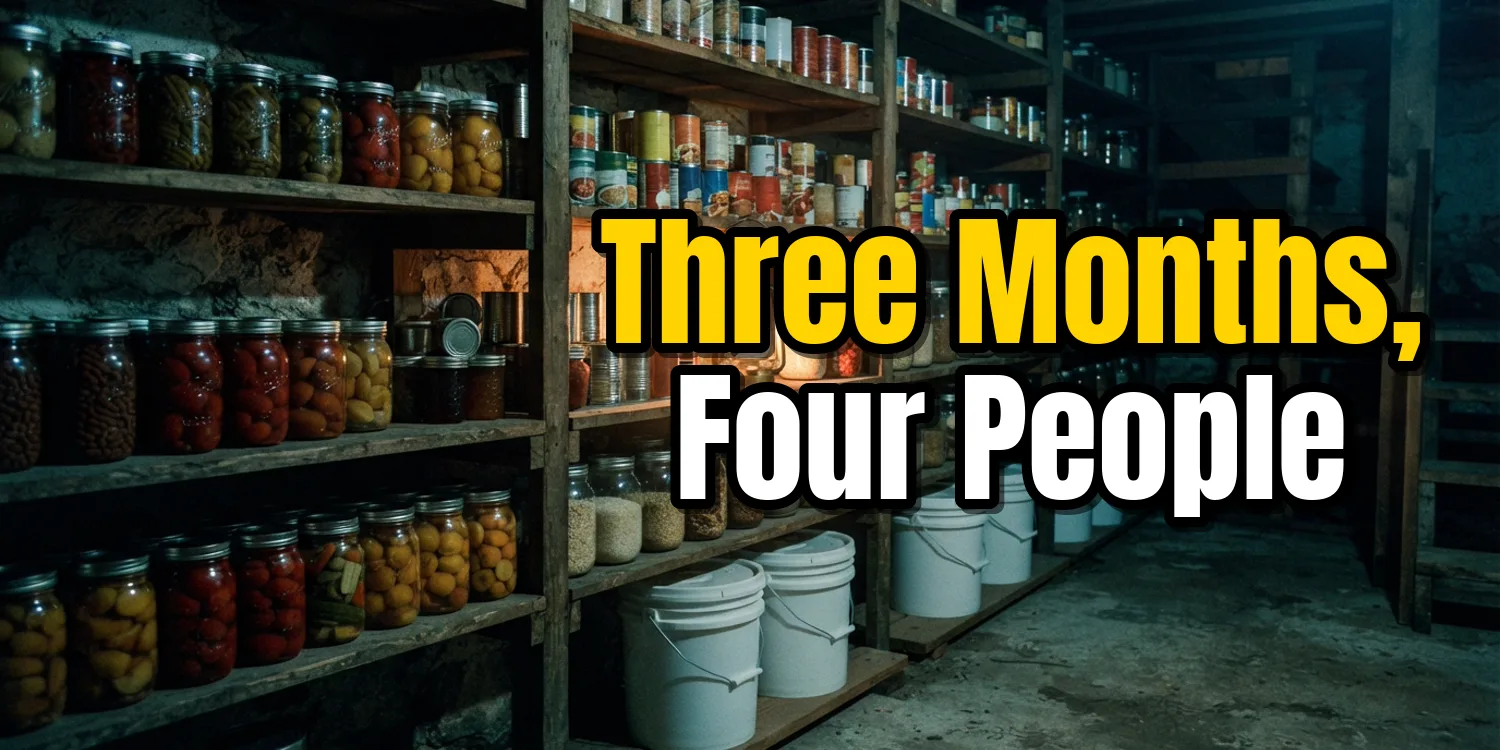
A family of four needs about 750,000 calories for three months: 300 to 480 pounds of grain plus beans, oil and milk, or 13 weeks of the meals you already cook.
How to pack, store and rotate food so a household can eat for months without a grocery run.
A family of four needs about 750,000 calories for three months: 300 to 480 pounds of grain plus beans, oil and milk, or 13 weeks of the meals you already cook.
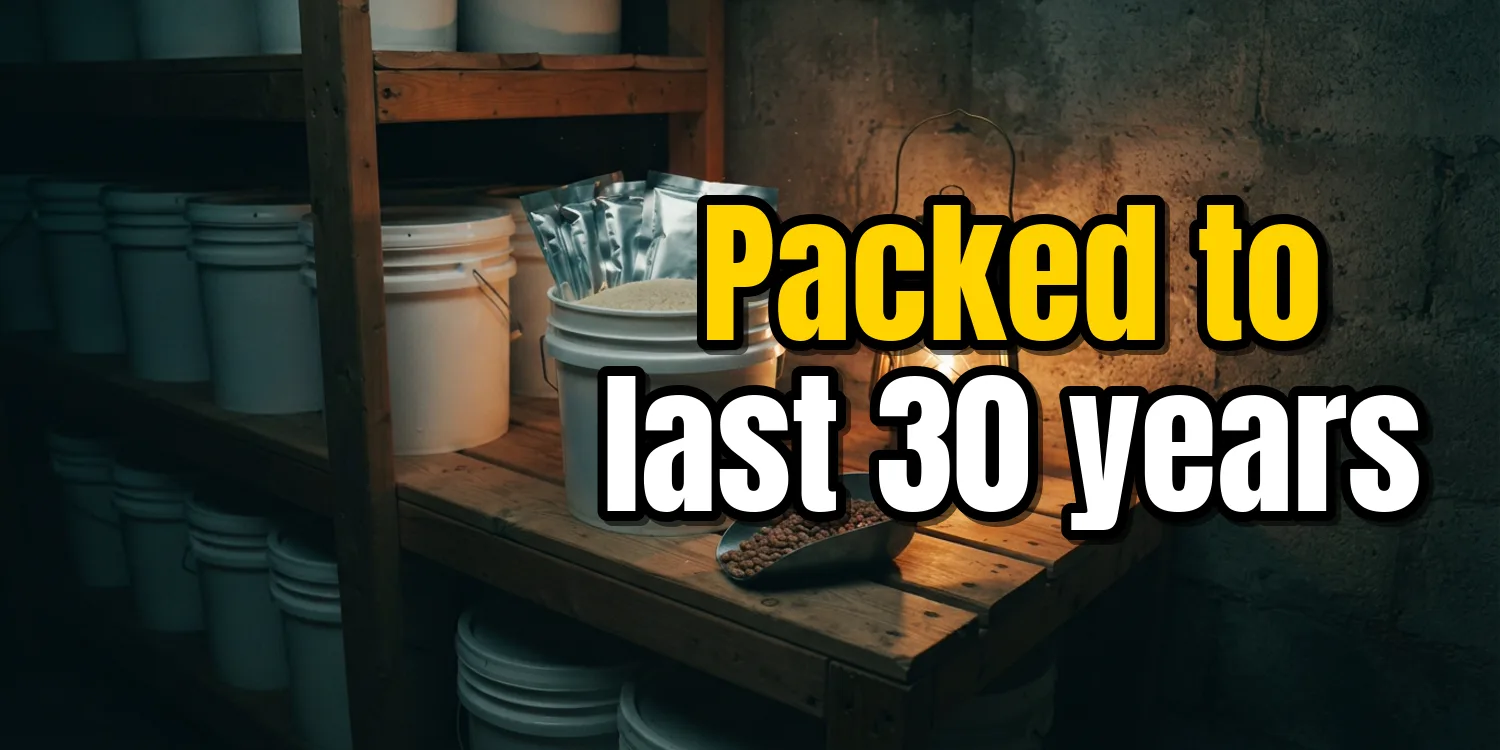
Seal white rice, wheat and dry beans in Mylar and buckets with oxygen absorbers, keep them cool and dry, and they stay edible for decades. Here is how, step by step.
A deep pantry is the cheapest insurance a household can buy, and the one most often done badly. Buckets go into a hot garage, flour goes rancid, and the family discovers in a real emergency that nobody likes what was put away. This section is about doing it once and doing it right.
Two kinds of food make up a working store. The first is what you already eat, bought a little deeper every week and rotated: canned meat, vegetables, pasta, peanut butter, the things Ready.gov lists for a short outage. The second is the long-term layer of rice, wheat, dry beans, oats and similar staples sealed away from oxygen, moisture and heat. Food scientists at Brigham Young University found that wheat and white rice packed this way were still very acceptable after 30-plus years, and beans, oats and potato flakes up to 30 years.
The enemies are always the same four: heat, moisture, oxygen and light. Utah State University Extension puts the best range at a constant 40 to 60 degrees and wants dry goods at 10 percent moisture or less before they go into an airtight container with an oxygen absorber. Get those right and the rest is bookkeeping.
Here you will find how to pack buckets and Mylar bags, how much food a family of four needs for three months and how to scale it to a year, which foods keep and which only look like they do, how to can and dehydrate at home, and how to keep a pantry rotated so nothing is wasted.
The gallons a household needs, the containers that keep them clean, and the ways to make doubtful water safe to drink.

Solar, batteries, generators and fuel, sized for what a household actually has to run.
Growing, raising and putting up your own food, from the first garden bed to the root cellar.
The household know-how our grandparents used daily, written down before it is lost.