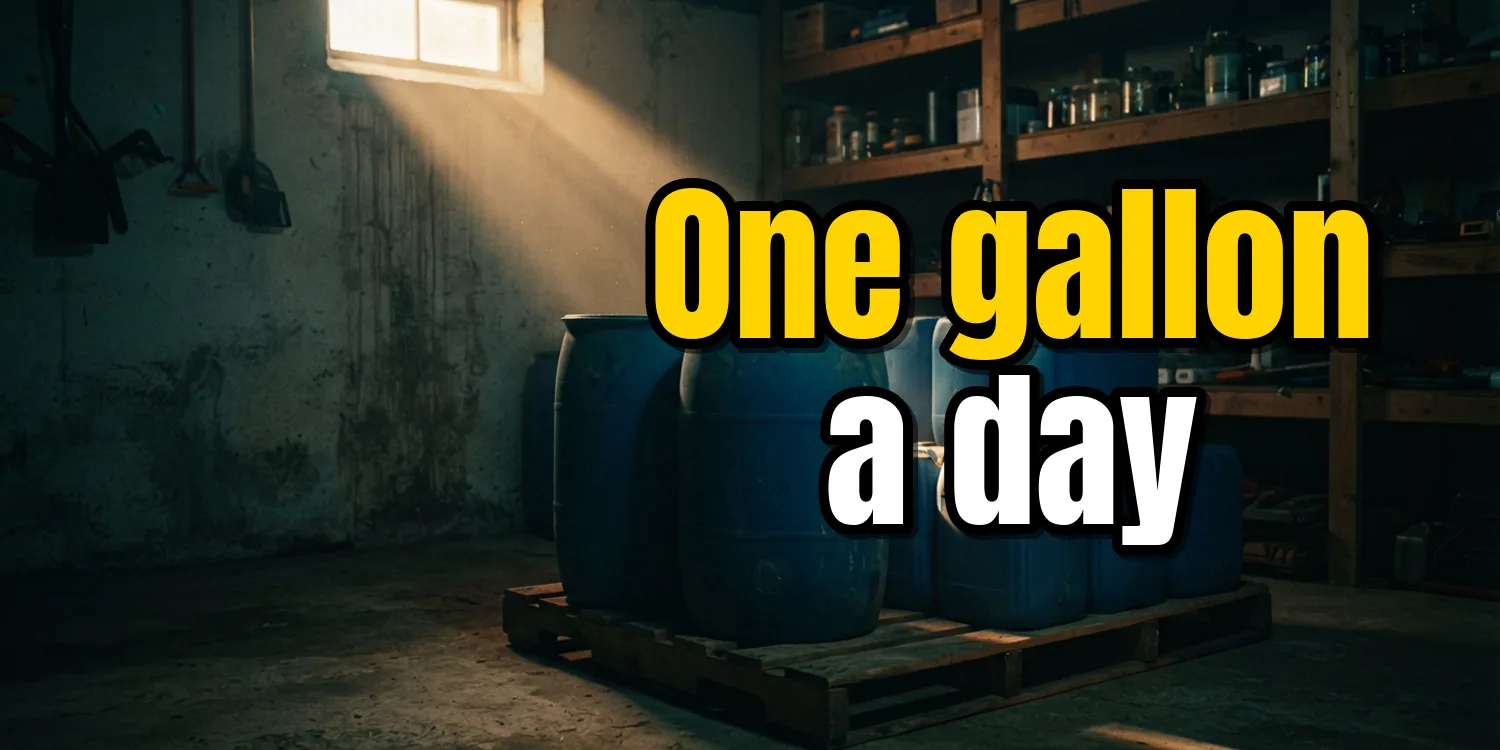
How Much Water to Store Per Person, and Where to Put It
One gallon per person per day, for at least three days and ideally two weeks: the math for a family of four, the containers, and where 470 pounds of water can sit.
The gallons a household needs, the containers that keep them clean, and the ways to make doubtful water safe to drink.
One gallon per person per day, for at least three days and ideally two weeks: the math for a family of four, the containers, and where 470 pounds of water can sit.
What an emergency water filter stops, what slips past it (viruses, salt, fuel, metals), and how to pair a gravity filter with boiling or bleach so the water is safe.
People can go weeks on thin rations of food. Without water it is days. When the taps stop, because a main breaks, a storm knocks out the pumping station or the power is gone for a well pump, water becomes the first problem and the heaviest one to solve.
The federal baseline is plain. Ready.gov says to store at least one gallon per person per day for several days, for drinking and sanitation, and notes that in very hot weather water needs can double. For four people that is 56 gallons for two weeks, close to 470 pounds of water, which is more room and more weight than most people picture. Our guide to how much water to store per person, and where to put it works out the numbers and the safe spots in a house. Storage alone is never the whole plan, though.
This section covers the three parts of a water plan. Storage: food-grade containers, barrels and how to rotate them, the bleach rinse for clean containers, and where that weight can safely sit in a house. Sources: rain catchment, hand pumps for a private well, the water already in your water heater and pipes. Treatment: boiling for one full minute, unscented household bleach at the right dose, emergency water filters and what they do and do not remove, and distillation for water with chemicals or salt in it.
Every method here comes with its limits stated. Boiling and chlorine kill germs but leave heavy metals and chemicals behind, and a filter that stops bacteria may not stop viruses. Knowing which tool fits which water is what keeps a household from getting sick in the middle of a crisis.
How to pack, store and rotate food so a household can eat for months without a grocery run.

Solar, batteries, generators and fuel, sized for what a household actually has to run.
Growing, raising and putting up your own food, from the first garden bed to the root cellar.
The household know-how our grandparents used daily, written down before it is lost.