Water
Emergency Water Filters: What Gets Through
A filter makes dirty water clear. Whether it makes that water safe depends on what is in it, and most filters leave viruses and chemicals behind.
The best way to filter water in an emergency is in two steps: run it through a filter rated to stop parasites and bacteria, then boil it for one minute or dose it with plain household bleach to kill the viruses most filters let through. A filter alone does nothing about salt, fuel, heavy metals or farm chemicals, so water you suspect of those needs a different source or distillation.
That gap between filtering and purifying is where households get caught out. The jug of creek water comes out of the filter crystal clear, it tastes fine, and it can still carry norovirus or hepatitis A. Clear is a measure of particles, and the germs that matter most are far smaller than anything you can see.
Your next step: set up a two-step water station before you need it. That is a gravity filter or a pump filter, a bottle of fresh unscented bleach and a measuring spoon, a stack of coffee filters for pre-straining, and a marked clean container for treated water only.
Filtering and purifying are two different jobs
A filter is a strainer. Water is pushed or dripped through a material with tiny holes, and anything bigger than the holes stays behind. A purifier is anything that deals with all three kinds of germ: protozoa, bacteria and viruses. Boiling and chlorine are purifiers for germs. Some filters with very small pores are too. Most camping and countertop filters are not.
The industry draws the line with a test standard. NSF/ANSI Protocol P231, the standard for microbiological water purifiers, asks a device to remove 99.9999 percent of bacteria, 99.99 percent of viruses and 99.9 percent of protozoan cysts, all three at once. A product that meets two of the three does not pass. When a box says "filter" and makes no virus claim, read that as a device that stops bacteria and parasites and leaves viruses to you.
Federal household guidance takes the same view from the other side. Ready.gov lists boiling, chlorination and distillation as its treatment methods and says that often the best answer is a combination of them. A filter fits into that picture as the first stage, the one that takes out grit, parasites and bacteria so the boil or the bleach can finish the work on clear water.
What a typical emergency filter stops
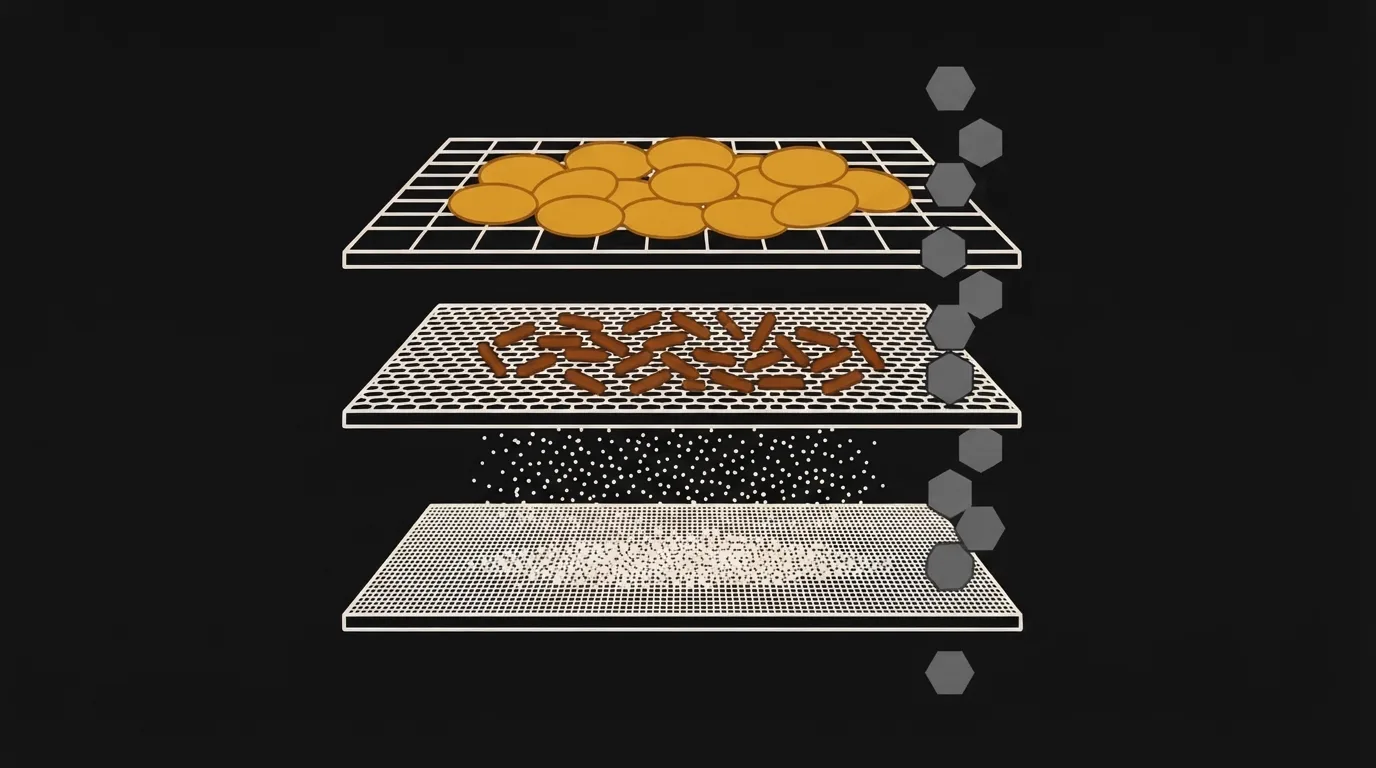
Germs come in three sizes, and the size decides what a filter can catch. Protozoa such as Giardia and Cryptosporidium are the biggest. Bacteria such as E. coli and Salmonella sit in the middle. Viruses are smaller again by a wide margin.
The CDC's guide to water filters gives the numbers that matter when reading a label:
- Protozoa: a filter with an absolute pore size of 1 micron or smaller, or one certified to NSF Standard 53 or 58 for cyst reduction, should stop Giardia and Cryptosporidium.
- Bacteria: microfilters rated 0.1 to 0.4 micron absolute usually remove bacteria as well as cysts.
- Viruses: standard microfilters may not remove enteric viruses such as norovirus. An ultrafilter rated near 0.01 micron should stop viruses, bacteria and parasites.
Watch the word "absolute" on the box. An absolute rating means nothing at or above that size gets through. A nominal rating is an average, and the CDC notes that a nominal filter can pass a share of particles at its stated size. Two filters both labeled "0.2 micron" can behave very differently if one of them is nominal.
Do water filters remove viruses?
Most do not, and that is the single most useful thing to know about an emergency filter. The hollow-fiber and ceramic elements sold for hiking and home emergency kits are usually microfilters in the 0.1 to 0.2 micron range. That is fine enough for E. coli and Giardia and too coarse to promise anything against viruses.
Backcountry advice can get away with skipping the virus step because a clear mountain stream far from people rarely carries human viruses. Emergency water is the opposite case. After a hurricane, a main break or a flood, the water you can reach is the water most likely to have sewage in it: a ditch, a swollen creek below a treatment plant, rainwater off a roof covered in debris. Those are exactly the places norovirus and hepatitis A turn up.
So the rule for a home kit is simple. Unless the device carries a virus claim backed by a standard such as P231, treat the filtered water as unfinished. A one-minute rolling boil, or one eighth of a teaspoon of plain 5.25 to 6 percent bleach per gallon with 30 minutes of standing time, covers what the filter left. Ready.gov's dose is written for clear water, which is one more reason to filter first. Our water section has the full storage and treatment basics.
Purifiers that do claim viruses exist: ultrafilters, some pump units with a chemical stage, and UV devices. They cost more, and the UV kind needs batteries and clear water to work. For a household, a microfilter plus bleach is cheaper and does the same job, at the price of a half-hour wait.
What gets through every ordinary filter
Anything dissolved in the water passes a mechanical filter, because it is not a particle at all. Salt, nitrate from fertilizer, lead and other metals, and fuel that has mixed into the water all go straight through the pores. Boiling does not help either: Ready.gov's own treatment table marks both boiling and chlorination as killing microbes without removing heavy metals, salts or other chemicals.
Activated carbon, the black granules in many pitcher and gravity elements, catches some of this and not the rest. The Minnesota Department of Health describes carbon as a proven way to remove certain chemicals, particularly organic ones, and to clear up chlorine taste and rotten-egg odor. It also says plainly that chemicals like iron and nitrate are not attracted to carbon and are not removed. Carbon has a limited capacity, too: once its surface is used up it stops binding chemicals and has to be replaced, and you get no signal when that happens.
What this means in practice:
- Salt or brackish water: a filter will not make it drinkable. Distillation will.
- Water near farm fields: nitrate passes carbon and pore filters alike. Look for a different source.
- Floodwater, or water with a fuel sheen or a chemical smell: skip it if there is any other choice. The mix of sewage, fuel and runoff is beyond any home filter.
- Old pipes or a well near mining or industry: metals stay in the water through boiling and through pore filters.
Distillation is the household fallback for dissolved contaminants. Ready.gov describes it as boiling water and collecting only the vapor that condenses, which leaves salt, heavy metals and most other chemicals behind in the pot. It is slow and uses a lot of fuel for a cup of water, so it is a method for drinking water only, when nothing better is in reach.
The kinds of emergency filter, and where each fits
Filters for home emergency use come in a handful of shapes. None is right for every household, so match the type to the water you expect to have and the number of people drinking it.
Gravity filters. A dirty-water container sits above a clean one, with the element between them, and water drips through on its own. Countertop steel units and hanging-bag systems both work this way. They need no pumping, so a household can fill the top in the morning and draw clean water all day. Their weakness is speed: an element slows down as it loads with silt, and a big family can drink faster than a small unit drips.
Pump filters. A hand pump forces water through the element. A pump moves more water per minute than a gravity unit and can draw straight from a creek or a cistern, but someone has to stand there pumping, and the moving parts can wear out.
Squeeze and straw filters. Small hollow-fiber elements you squeeze a pouch through or drink through. They weigh almost nothing and belong in a car kit or a go-bag. For a house full of people over two weeks they are too slow to be the main supply.
Ceramic elements. Ceramic candles stop protozoa and bacteria, can be scrubbed clean when they clog, and often carry a carbon core for taste. They crack if dropped, and a hairline crack lets dirty water bypass the ceramic.
Pitcher and faucet filters. These are carbon filters for treated city water. They improve taste and remove some chemicals, but they are not made to stop germs, so they have no place in treating untreated water.
Setting up a gravity water filter for an emergency
A gravity filter suits a household that is sheltering at home, because it turns treatment into a slow, steady background job. A few habits keep it working through a long outage.
- Settle and pre-strain first. Ready.gov advises letting suspended particles settle, then straining the water through coffee filters or layers of clean cloth. Silty or tea-colored water clogs hollow-fiber elements fast, and a coffee filter costs nothing compared with a new element.
- Keep dirty and clean sides apart. Use one marked container for raw water and another for treated water only. A drip of raw water on the clean spigot undoes the filter.
- Finish with bleach or a boil. Add the bleach dose to the clean chamber or the jug you fill from it, wait 30 minutes, and check for a faint chlorine smell.
- Clean the element as the maker says. Hollow-fiber elements are usually backflushed with clean water. Ceramic is scrubbed. When the flow rate drops, it is time.
- Track the gallons. Every element has a rated capacity. Write the start date on the unit and keep a spare element in the kit.
The common objection is cost: a decent countertop unit and spare elements cost more than a case of bottled water. A filter keeps producing for weeks from a rain barrel or a pond, though, and stored water runs out on a schedule. Ready.gov's minimum of one gallon per person per day means a family of four needs 28 gallons for one week. Most homes cannot store a month of that (here is how much water to store per person and where to keep it), and a filter covers the gap.
Cold weather can wreck a hollow-fiber filter
Winter outages bring a risk most filter owners never hear about. Water left inside a hollow-fiber element expands when it freezes and can split the fibers. The damage cannot be seen, and a split fiber lets unfiltered water straight through, so the filter looks normal while passing the very germs it was bought to stop.
Hiking writers such as SectionHiker advise replacing any hollow-fiber filter that may have frozen. In a cold house with the heat out, that means keeping the element inside the warmest room, never in a garage, shed or car, and thawing it slowly at room temperature if it gets cold. A few models are rated to survive freezing. If your manual does not say yours is one of them, assume it is not.
My take: how I'd build a household water treatment kit
I'd start with stored water and a jug of fresh unscented bleach, because those two cover a short outage with no gear at all. Then I'd add one gravity filter sized for the household, with a spare element, a pack of coffee filters and two clearly marked buckets. That handles a long outage from roof runoff or a creek.
I'd skip any filter whose packaging gives no absolute pore size and no certification, and I wouldn't pay extra for a virus claim when a measured dose of bleach does that job for pennies. For a house near salt water, farm fields or a flood zone, I'd look harder at storing more water and at distillation, since no filter fixes what is dissolved.
Put the station together this week, filter a gallon from the garden hose to learn how fast it runs, and write the bleach dose on the lid. More on storing and treating water is in the water section.
