Power
Generator Safety: CO, Placement, Backfeed
Where to put a generator in an outage, how to keep its exhaust out of the house, and how to get its power inside without electrocuting a lineworker.
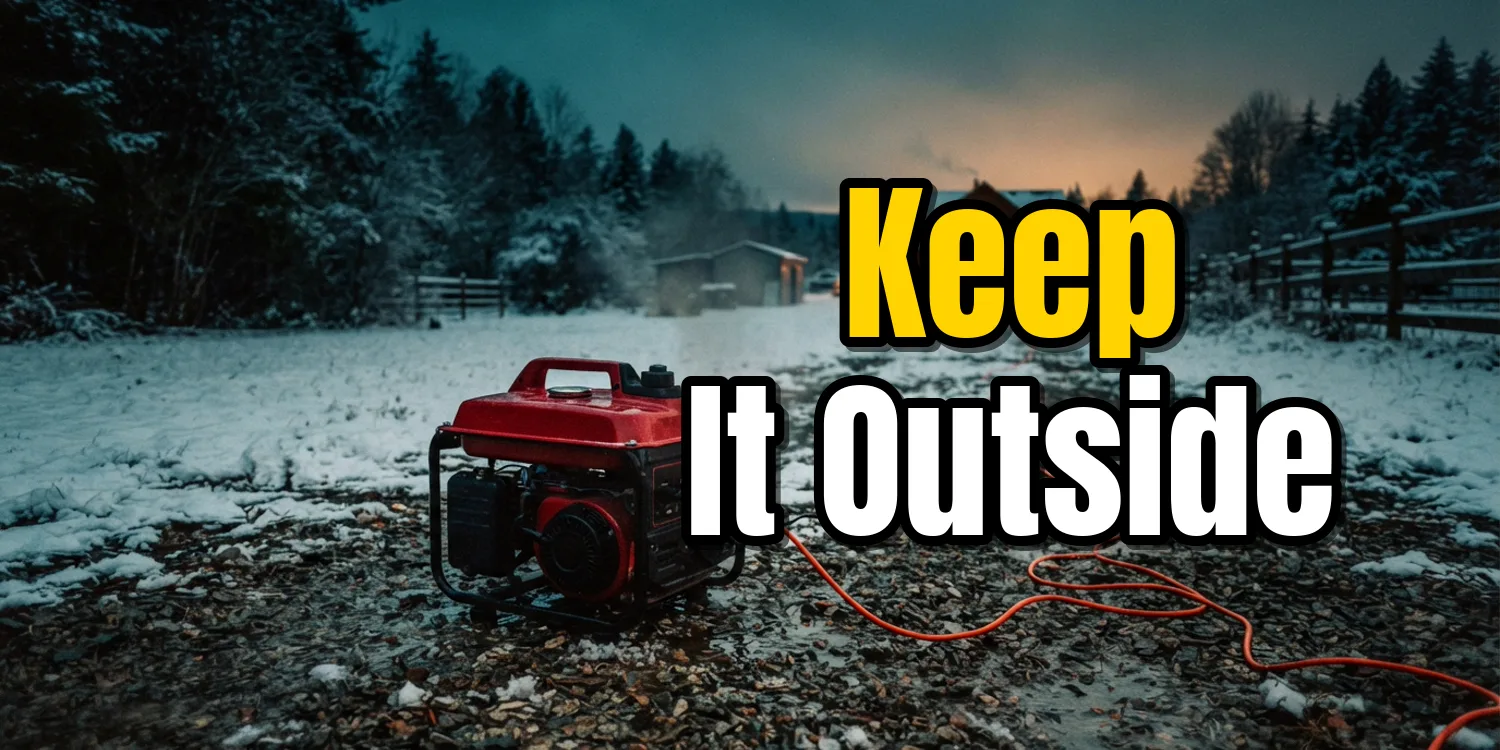
A portable generator is safe to run only outdoors, at least 20 feet from any window, door or attached garage, with its exhaust pointed away from the house and battery-backed carbon monoxide alarms on every floor inside. Its power reaches the house through heavy outdoor cords run straight to appliances, or through a transfer switch an electrician installed, and never through a wall outlet.
Those two rules prevent the two ways generators kill people in an outage: exhaust gas that drifts indoors while the family sleeps, and current sent backward up the power line. The rest of this guide covers how to follow them on a cold, dark night when the easy choice is the dangerous one.
Your next step, before the next storm: put a carbon monoxide alarm with a battery backup on each floor of the house and one outside each sleeping area. A plug-in alarm with no battery goes dark the moment the grid does, which is exactly when you need it.
Carbon monoxide is the generator hazard that kills most often
A small gasoline engine puts out carbon monoxide at a rate no open window can keep up with. The Consumer Product Safety Commission counts nearly 100 deaths a year in the United States from portable generator CO poisoning, and its reports find most of them happen at home and many in the coldest months, when outages are long and people want the machine close.
The gas has no color, smell or taste. The exhaust you can smell is other combustion products, so a room that smells clean can still hold a lethal dose. The Red Cross guidance, written with technical advice from the CDC, the CPSC and the National Fire Protection Association, puts it bluntly: CO can rapidly lead to full incapacitation and death, and opening doors and windows or running fans will not prevent it from building up.
That last point is what catches careful people. A generator in the garage with the big door rolled up feels ventilated. It is not. Gas pools in the garage and moves into the house through the connecting door, the attic and gaps in the wall. The same goes for a basement, a crawlspace, a shed, an enclosed porch and a carport with walls on three sides.
How far should a generator be from the house?
Ready.gov sets the minimum at 20 feet from windows, doors and attached garages. Treat that as the floor. Twenty feet from the back door means little if the bedroom window above it is open a crack, or if the wind is pushing the exhaust straight at the siding.
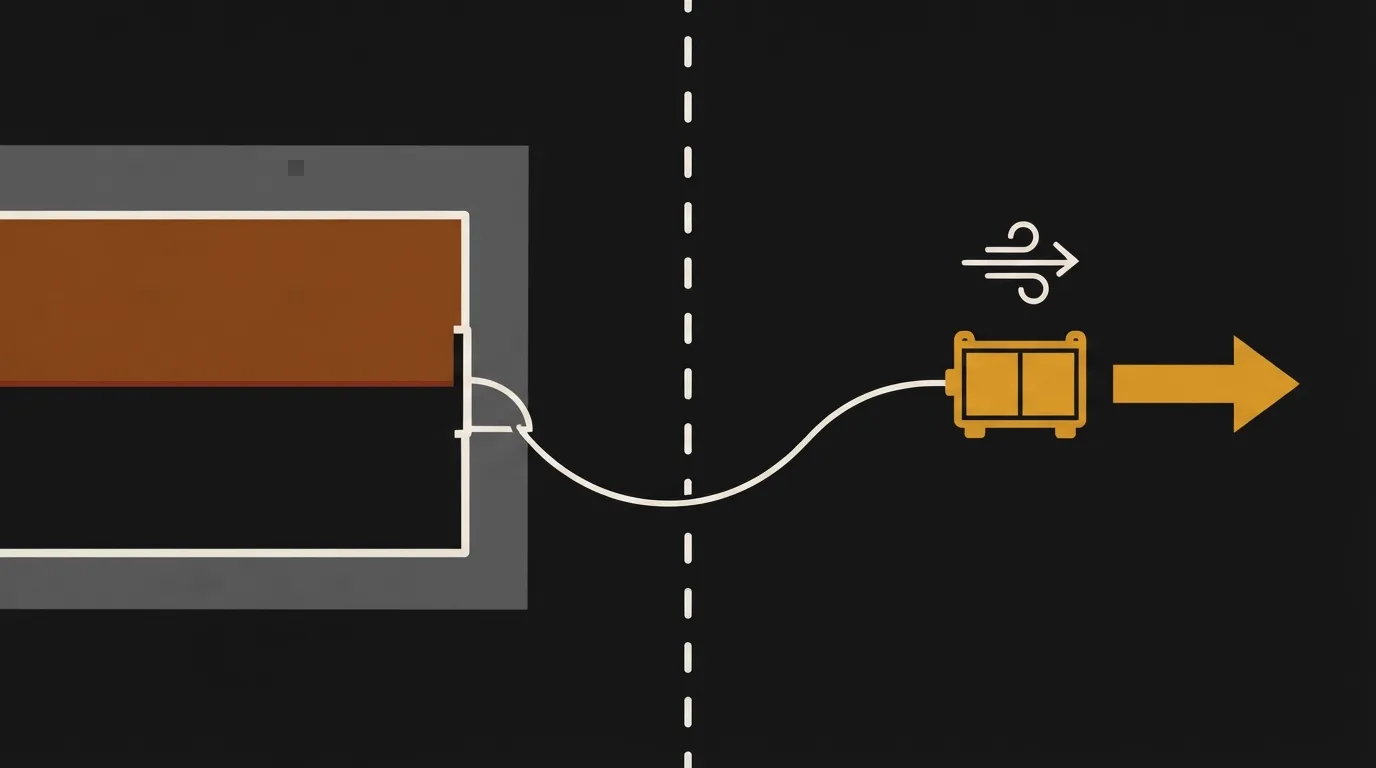
Set the generator up with these checks:
- Measure from every opening on that side of the house, including basement windows, dryer and bathroom vents, and the air intake of a furnace or heat pump.
- Point the exhaust away from the house. The City of Sanford, Florida, which deals with generator deaths after every hurricane, tells residents to make sure the exhaust faces away from doors, windows, vents and garage entries.
- Read the wind. Put the generator downwind of the house so the breeze carries fumes off. If the wind shifts overnight, move the machine.
- Think about the neighbors. On a suburban lot, 20 feet from your house may be ten feet from the house next door. Their bedroom window counts too.
- Keep the cord long enough for the job. A 25-foot cord pulls the generator close to the wall. Buy cords long enough to put real distance between the engine and the house.
The main objection is theft and noise: people pull the generator close so they can hear it and watch it. A chain and a padlock through the frame to a post or a ground anchor answers the theft worry better than a garage does, and a sleeping household is safer with a generator it can hear from 25 feet than one it cannot hear from the next room.
Keeping it dry without closing it in
Rain and snow are what push people to tuck a generator under the eaves, onto the porch or into the shed. Water on a running generator is a shock hazard, so the worry is real. The Red Cross answer is to run it on a dry surface under an open canopy, such as a tarp held up on poles. The canopy keeps water off the outlets while air moves freely on every side.
Purpose-made generator tents and covers exist for the same job. Whatever you use, it has to leave the sides open and the exhaust clear. A cover that wraps the machine traps heat and gas against it. Never touch the generator or a plugged-in cord with wet hands, and keep cord connections off the wet ground.
Carbon monoxide alarms are your second line of defense
Distance is the first line. The alarm is what wakes you when the wind turns at 2 a.m. Ready.gov asks for working CO alarms on every level of the home, and the Red Cross adds one outside each sleeping area. Both specify battery backup, because a hard-wired or plug-in alarm without one loses power in the very outage that has the generator running.
- Test each alarm with its button before the generator starts the first night of an outage.
- Keep spare batteries for the alarms in the same box as the generator oil and spark plug.
- Replace an alarm when it reaches the end-of-life date printed on it. The sensors wear out.
- A smoke alarm does not detect carbon monoxide unless it is a combination unit labeled for both.
What to do if the alarm sounds or someone feels sick
Early CO poisoning feels like the flu or plain exhaustion: headache, dizziness, weakness, nausea, feeling lightheaded. In an outage, with everyone tired and cold, those signs are easy to wave off. If anyone in the house feels this way while a generator is running, treat it as carbon monoxide until proven otherwise.
- Get everyone, pets included, out into fresh air right away. Do not stop to find the source.
- Call 911 from outside or from beside a wide-open door.
- Stay in the fresh air until emergency crews say the house is clear.
- Shut the generator off only if you can reach it without going back through the house.
People asleep or drunk can die without ever waking, which is why the alarm matters more than knowing the symptoms. The same alarm also watches anything else burning indoors during the outage, such as the kerosene or oil lamp on the kitchen table.
Generator backfeed danger: why the wall outlet is off limits
Backfeeding means sending generator power into the house wiring through a regular outlet, usually with a homemade cord that has a male plug on each end. It looks like a clever shortcut that lights the whole house. It is one of the most dangerous things a homeowner can do in an outage.
Your house wiring connects to a transformer on the pole or the pad out front. That transformer steps thousands of volts on the street line down to the 240 volts in your panel. It works just as well in reverse. Push 240 volts into the panel with the main breaker on, and the transformer steps it back up onto the street line. A lineworker who believes that line is dead can be electrocuted by it. Middle Tennessee Electric, a utility cooperative, calls backfeed one of the deadliest threats its crews face during storm repairs, and notes that Tennessee law requires safety devices on any generating equipment connected to the grid.
The danger reaches past the line crew:
- Your neighbors: the Red Cross warns backfeeding puts neighbors at risk of electrocution, since they share the same transformer.
- Your household: the second male plug on that cord carries full voltage on bare prongs the moment the other end is in the generator.
- Your equipment: when the grid comes back, utility power meets generator power in your panel. The generator, the wiring and anything plugged in can be wrecked, and a fire can start.
Utilities also install some equipment that resets the line automatically after a fault, so a line can come back unannounced. A homeowner flipping the main off "just in time" is betting lives on a breaker and a memory.
Two safe ways to get generator power inside
Cords straight to the appliances. This is the simplest method and needs no electrician. Run heavy-duty, outdoor-rated extension cords from the generator's outlets indoors and plug the refrigerator, a lamp and a phone charger into them. The Red Cross sets the standard for the cord: rated in watts or amps at least equal to the total of what is plugged into it, free of cuts and tears, with all three prongs including the grounding pin. A thin indoor cord overheats under a refrigerator's starting load. Route the cord through a door or window opened only as far as the cord needs, and seal the gap with a towel so cold air and fumes stay out.
A transfer switch or an interlock at the panel. Ready to power a well pump, a furnace blower or hard-wired lights? Then you need a connection to the house wiring, and it has to be made with a device that disconnects the house from the grid first. The Red Cross advises hiring an electrician to fit one that meets the National Electrical Code and your local codes. Middle Tennessee Electric says every generator must have an automatic or manual transfer switch to disconnect it from the grid, and that this is not a do-it-yourself project.
A manual transfer switch feeds a handful of chosen circuits. A panel interlock is a sliding plate that physically stops the main breaker and the generator breaker from being on at the same time, so you choose circuits at the panel. Either one is fed through a weatherproof inlet box on the outside wall, so the generator still sits out in the yard at its safe distance. Many towns require a permit and an inspection. The cost of an electrician is the objection most people raise, and it is a one-time cost against a risk that otherwise returns every outage.
Refueling and storing fuel without starting a fire
Fire is the third generator hazard, and it usually starts at the gas can. Shut the engine off and let it cool before you refuel. Sanford's guidance suggests waiting at least ten to fifteen minutes, because gasoline spilled on a hot muffler or cylinder can flash. Refuel in daylight when you can, and keep a flashlight or headlamp with the fuel so you are not pouring blind.
For storage, the Red Cross guidance is specific:
- Keep fuel in an approved safety can, and use the fuel type the generator's label calls for.
- Store it outside the living space, in a locked shed or another protected spot.
- Keep it away from fuel-burning appliances, such as a gas water heater in the garage, whose pilot can ignite vapor.
- Ask your local fire department how much fuel you may store. Many places limit it.
Gasoline also goes stale in storage, which leads to engines that will not start on the one night you need them. Treat stored fuel and rotate it, and start the generator under a load once a month so you find problems in good weather.
A safe routine for the first night of an outage
- Test the CO alarms upstairs and down, and put fresh batteries in any that chirp.
- Carry the generator to its spot in the yard, at least 20 feet out, exhaust pointing away, downwind of the house.
- Set up the canopy if there is rain or snow, with the sides open.
- Chain the frame to something solid if theft worries you.
- If the house has a switch or interlock at the panel, set it to generator before starting. If not, lay out the outdoor cords and plug appliances straight into them.
- Start the generator, then add loads one at a time, largest first, so the starting surge of the refrigerator or freezer does not trip it.
- Before bed, walk outside and check the wind direction and the exhaust. Then check that every alarm inside is lit.
Keep food decisions simple while you work through this. Ready.gov notes a closed refrigerator keeps food cold for about four hours and a full freezer for about 48, so there is no need to rush the setup or cut corners on placement to save the milk.
My take: what I would put in place first
I'd start with the CO alarms, ahead of the generator itself. A household with alarms and a borrowed generator is safer than one with a new machine and no warning inside. The next money is best spent on cords: two genuinely heavy outdoor cords, long enough to reach 25 or 30 feet past the house, so the safe placement is also the easy one.
For anyone who means to run a well pump or furnace, I would have an electrician fit an inlet box and an interlock or transfer switch this winter, while there is no storm and no line at the supply house. A homemade backfeed cord belongs in the trash. It has no safe use.
Your one step today: test the CO alarms you have, and buy a battery-backed one for any floor without one. More on keeping a house powered and warm is in the power section.
