Homestead skills
Laying Hens for Eggs Through Hard Times
A small flock turns feed and scraps into protein every day. Here is how many birds a family needs and how to carry them through winter and a long outage.
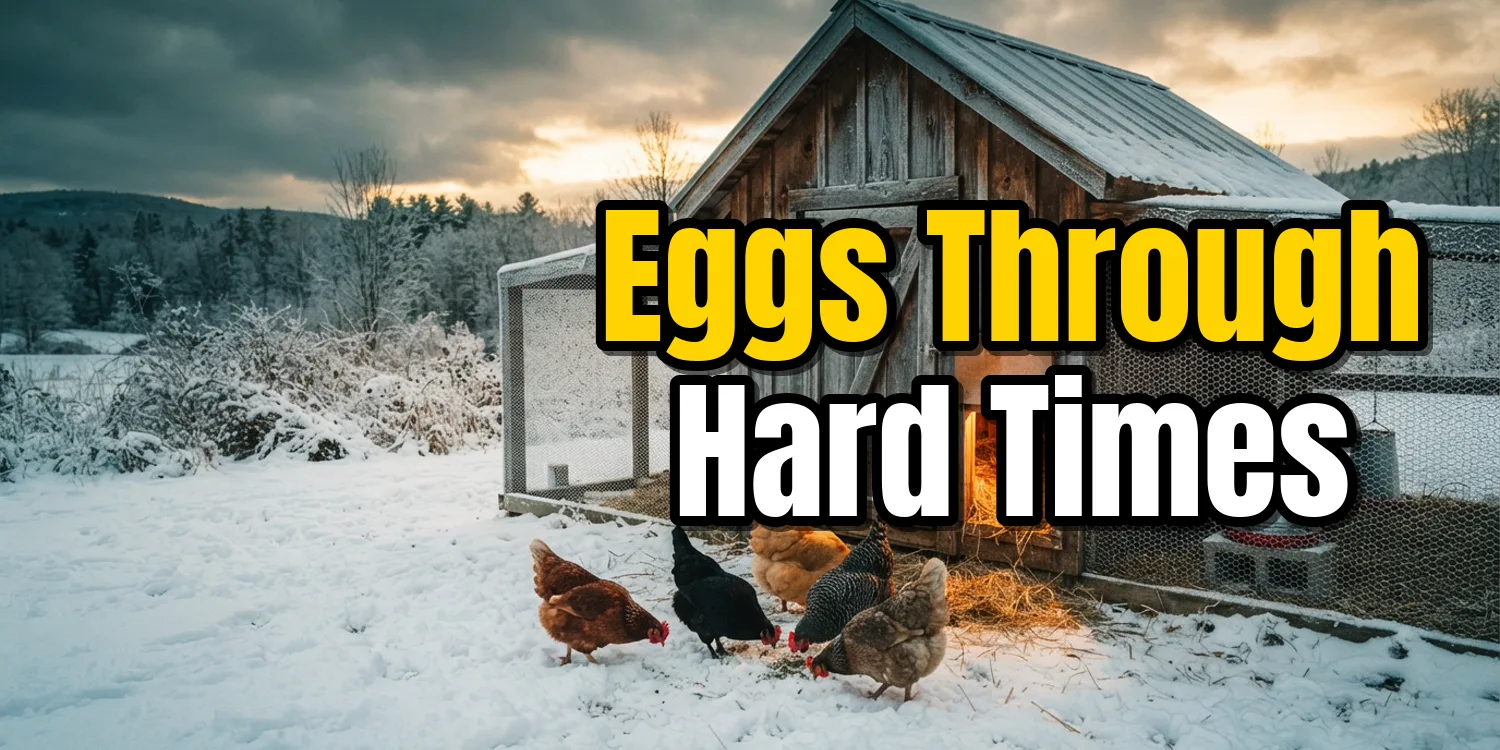
A family of four that eats about two dozen eggs a week needs six laying hens, planned at four eggs per hen per week, and two or three more to cover winter, the fall molt and the birds that slow down with age. Keep them in a dry, ventilated coop, give them water that cannot freeze and a steady supply of layer feed, and they will keep producing through most of what a hard year throws at a household.
Eggs are the one fresh protein a suburban or rural household can produce every day on a small lot without butchering anything. That is why hens come up so often among people building a food supply that does not depend on a store. The flock still has needs of its own, and those needs do not pause when the power goes out or the feed store closes.
How many chickens a family needs
Start from what your household eats. Count the eggs that go into breakfasts and baking in a normal week, then divide by the laying rate.
Michigan State University Extension gives four eggs per week per hen as a good planning goal for first-year layers. Some birds will beat that at the height of summer, but four is the honest average across a year that includes short days and the molt. At that rate:
| Eggs a week | Laying hens | With spares |
|---|---|---|
| 12 | 3 | 4 to 5 |
| 24 | 6 | 8 to 9 |
| 36 | 9 | 11 to 12 |
The spares matter more in hard times than in good ones. A hen that goes broody stops laying for weeks. One that gets sick, or gets taken by a hawk, leaves a hole in the week's count. If the flock is your protein and not a hobby, a buffer of two or three birds is cheaper than going without.
Age is the second half of the math. University of Arizona Cooperative Extension says most hens lay best in their first one to two years, then slow each year, and are often laying only now and then by age three or four. Pullets also take time to start: Arizona Extension puts first eggs at 18 to 22 weeks, depending on the breed. A flock that has to keep producing therefore needs a rotation. Add a few young birds every year or two, so the new layers come on before the old ones fade.
Check the rules and the space before you buy chicks
Most American towns and many HOAs have something to say about poultry: how many birds, how far the coop sits from the property line, and whether roosters are allowed at all. Read your city code and any deed restrictions first. A flock that gets you a citation in the spring of a bad year is a flock you lose.
Space comes next. Utah State University Extension's backyard chicken basics sets a floor of two to three square feet per bird inside the coop, and more makes them easier to manage. Plan for at least one nest box for every four hens, the ratio Arizona Extension gives to keep them from fighting over nests and breaking eggs. A roost bar, a feeder, a waterer and a fenced run finish the setup.
For predators, build it once and build it tight. Raccoons, foxes, loose dogs and weasels all take backyard hens, and most of them hunt at night. Hens go into a closed coop at dusk, the doors latch with something a raccoon cannot open, and openings are covered in hardware cloth rather than the thin hex netting sold as chicken wire, which keeps chickens in but does little to keep a determined predator out.
Feed is the cost that never stops
A laying hen eats every day whether she lays or not. USU Extension puts it at about a third of a pound of feed a day per laying hen, on a ration around 18 percent protein. Six hens then go through roughly two pounds a day, fourteen pounds a week, and a 50-pound bag in about three and a half weeks.
That number is what makes a flock a real prep or a liability. If the roads close or the feed store runs short, you need feed on hand, kept where rats and damp cannot get at it. Steel trash cans with tight lids are the old answer and still the right one. Store a few weeks' worth, rotate it by opening the oldest bag first, and keep it dry, because moldy feed sickens birds.
Kitchen scraps, garden waste and foraging stretch the bag. Hens on pasture or in a big run find insects, seeds and greens on their own, and they will clean up vegetable trimmings and stale bread. Scraps lower the feed bill without replacing the ration. A hen needs protein and calcium to lay a sound egg, and Arizona Extension ties egg-eating, one of the habits that wipes out a week's collection, to diets short in both. Offer crushed oyster shell on the side, and keep layer feed as the base.
Keeping chickens in winter
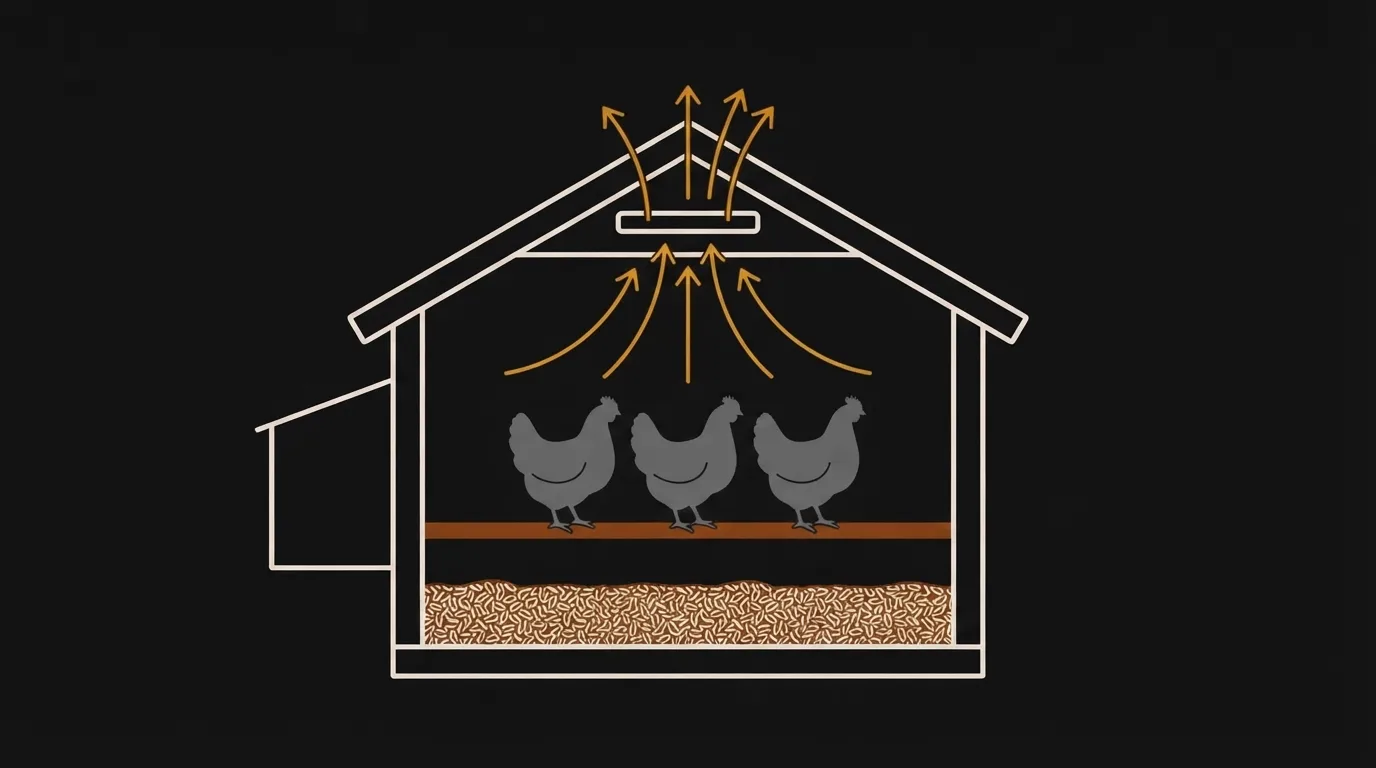
Cold alone is rarely what hurts a flock. University of Illinois Extension describes the winter coop as dry, draft-free and well ventilated, three conditions that sound contradictory until you see what each prevents. A draft blowing across the roost chills sleeping birds. Too little ventilation traps the moisture from their breath and droppings, along with the ammonia from the litter, and that damp air causes respiratory trouble and frostbite.
Illinois Extension's test for drafts is a good one: you should never see air moving a chicken's feathers inside the coop in winter. Caulk the gaps near roost height, and leave a vent at the roof or eave plus a partly open window high up, so moist air leaves above the birds. A six- to twelve-inch layer of dry bedding on the floor insulates their feet and soaks up droppings.
Combs and wattles freeze first. Illinois Extension notes that breeds with large combs are more prone to frostbite, which is worth weighing when you choose birds for a northern flock. For a small flock, it suggests a coat of petroleum jelly on big combs and wattles. When snow covers the run, shovel a patch or spread straw so the birds are not standing on it.
Feed them more in winter. Hens burn energy to stay warm, and Illinois Extension suggests free-choice feeding or scattering grain in the litter in the evening, which keeps the birds busy, turns the bedding and gives them fuel for the night.
Water that does not freeze
This is the winter job that cannot slip.
Illinois Extension says chickens need access to water at least every ten hours, day and night, and a waterer that freezes solid by afternoon fails that test. The usual fix is a heated base or a heated bowl, with every cord and connection kept off the floor and out of the birds' reach. A heater in a dusty coop full of dry bedding is also a fire risk, so inspect it before each winter and replace a cord that is chewed or cracked.
On the grid, that is the whole answer. Off it, or in an outage, keep two plain waterers and swap them: one in the coop, one thawing in the kitchen, traded morning and mid-afternoon. A black rubber pan set in the sun thaws faster than a plastic fount. It is a chore, but it works with no power at all, and it is the method to practice before the ice storm, not during it.
Why laying drops in winter, and whether to add light
Hens lay by day length. Both Illinois and Arizona Extension give 14 to 16 hours of light as what keeps production going, and a northern December offers far less. As the days shorten, laying slows. Most hens also molt once a year, usually starting between August and October according to Arizona Extension, and they lay little or nothing while they grow new feathers. Expect the fewest eggs of the year between the molt and late winter.
You have two choices. The first is supplemental light. Illinois Extension says a 60-watt incandescent bulb, or an 800-lumen equivalent lamp with a downward reflector hung seven feet above the floor, lights 200 square feet of coop. Kansas State's Douglas County Extension recommends adding the light in the early morning on a timer, so the hens settle to roost with the natural dusk. Arizona Extension adds that research shows supplemental light does not shorten a hen's laying life or reduce her total eggs, as long as her diet is balanced and has enough calcium.
The second is to let the flock rest and plan around the dip. The light needs power every day, and Kansas State's extension agent warns that missing even one day can stop production. In a long grid-down winter you may not have power to spare for a coop bulb. A household that eats from a flock should expect fewer eggs from November to February, eat more of the pantry in those months, and let the spring flush make up the difference.
Handling eggs so they stay safe
Backyard hens can carry Salmonella while looking perfectly healthy, and the CDC's backyard poultry guidance is short and practical. Collect eggs often, since an egg left in the nest gets dirty or broken. Do not wash a dirty egg in cold water, because the CDC says colder water can pull Salmonella from the shell into the egg. Rub dirt off with fine sandpaper, a brush or a cloth instead. Refrigerate eggs after collecting them, and cook them until the yolk and white are firm.
Wash your hands with soap and water after handling the birds, their eggs or anything in the coop. Keep the flock out of the kitchen, and keep coop boots outside. In a water emergency, handwashing water belongs in the household budget: our guide to how much water to store per person covers that, and the hens need their own gallons on top.
Planning the flock for a long emergency
Think about the flock the way you think about the pantry: what keeps it going for a month with no resupply. Store feed, rotated. Keep a way to give water that does not depend on a heater. Have a closed, latched coop, because predators get bolder when people are distracted. Keep a pen or a dog crate you can use to separate a sick or broody hen.
Watch for bird flu reports in your state in spring and fall migration. Avian influenza spreads from wild birds, and Arizona Extension lists it among the illnesses that cut laying. Keep wild birds away from the feed and water, and do not let visitors walk from someone else's flock into yours.
Decide in advance what happens to old hens. Some households keep them as pets and grow the flock to make up for them. Others cull and cook them, which returns some of the feed as meat in a lean year. Either is a sound choice, but make it before the coop is full of birds that eat and no longer lay.
My take: start small, plan for the dip
I'd start with five or six hens of a cold-hardy, small-combed breed if you live where winters freeze, bought as young pullets close to laying age so the first eggs come within weeks. That covers a couple of dozen eggs a week for most of the year and leaves room in the coop to add birds later. I'd buy the feed storage cans and the second waterer the same week as the coop, because those are what carry the flock through the first outage.
I wouldn't count on winter eggs without power.
Plan the pantry so a slow January is no hardship. Then I'd add two or three pullets each spring, so the flock's count of hens in their prime stays steady from year to year.
A flock pairs well with a garden and a well-kept pantry. The rest of our guides to raising and keeping food are in the homestead section, and the household quantities are in how much food a family of four needs for three months.
Sources
- University of Illinois Extension: How to care for backyard chickens in winter
- University of Arizona Cooperative Extension: Nine common reasons your hens aren't laying (az2186)
- Michigan State University Extension: Laying hen rack card
- Utah State University Extension: Basics for raising backyard chickens
- Kansas State University, Douglas County Extension: Why does egg production lower in winter?
- CDC: Backyard poultry
